Action camera
A media object that becomes ordinary equipment.
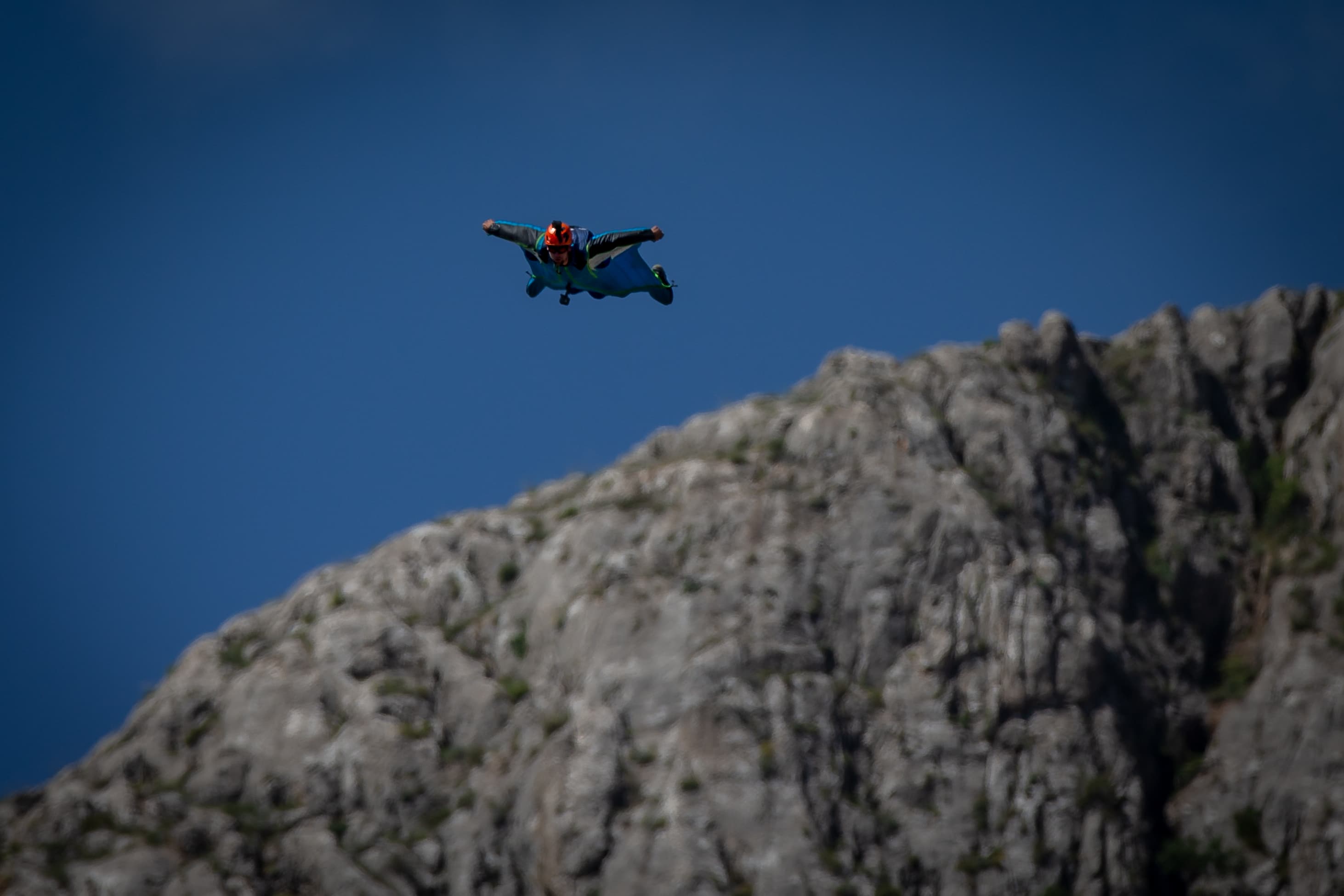
Qualitative study
Five experienced BASE athletes on visibility, risk and safety culture.
Visibility changes the conditions in which decisions are made.
Social media appeared as an entry point, learning platform, international network and archive, but the visible clip rarely contains the full preparation behind it.
What social media makes visible
The interviews indicate that digital platforms can entertain, teach, connect and warn at the same time.
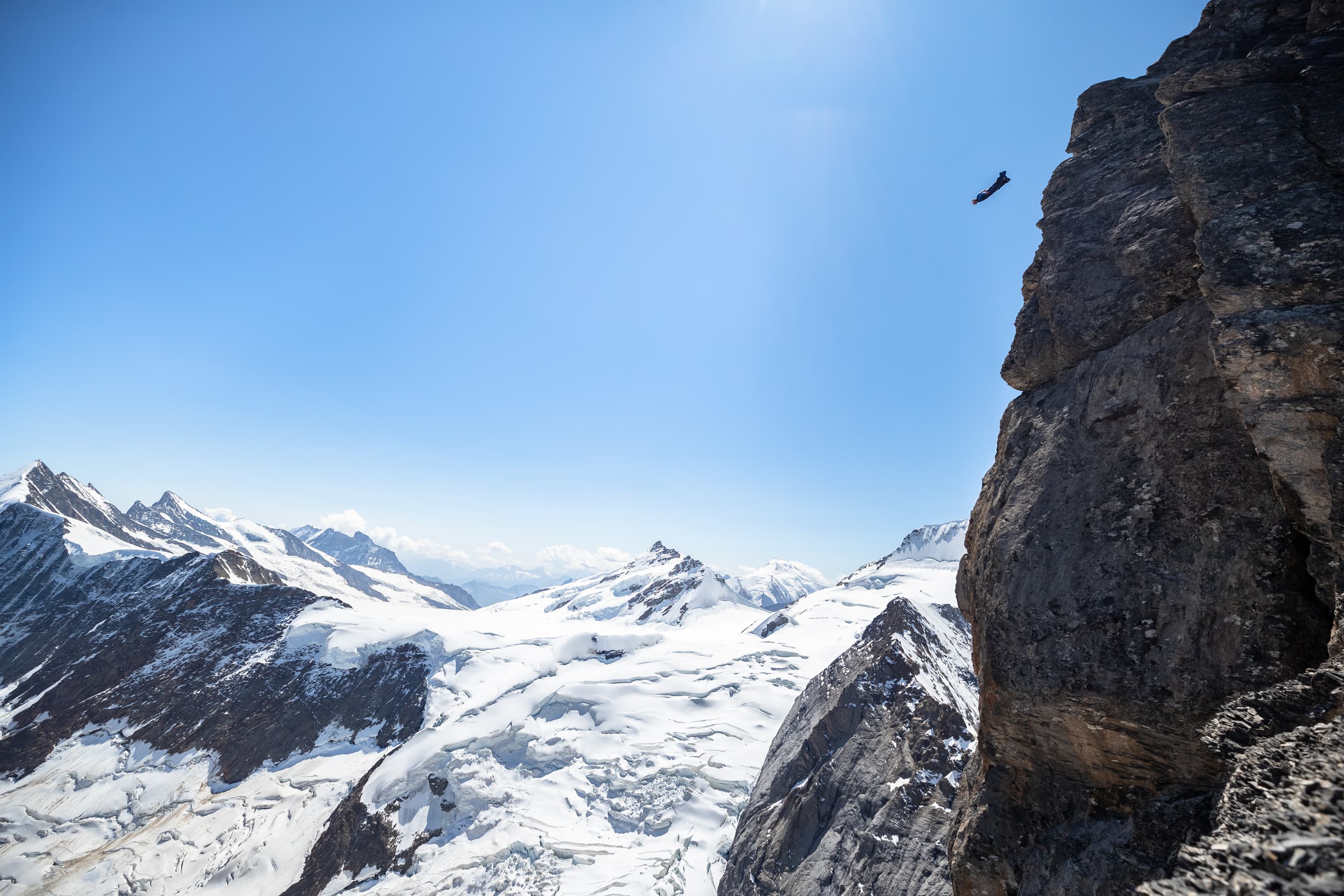
A BASE jumping clip appears through recommendation and curiosity.
New projects, flight lines and techniques become visible.
Planning notes, route analysis and technical discussion can turn media into shared knowledge.
Close calls and incidents can shift the same interface from entertainment to analysis.
Knowledge dispels fear.
The camera is a visible part of contemporary BASE jumping equipment. It may influence planning, positioning and image composition, but it remains one part of a broader equipment and preparation system. The interviews do not support a simple automatic link between camera use and riskier behaviour; experience, planning and deliberate use remain important.
Camera presence
Cameras are normalised in modern BASE jumping, but the interviews do not support a simple camera-causes-risk claim.
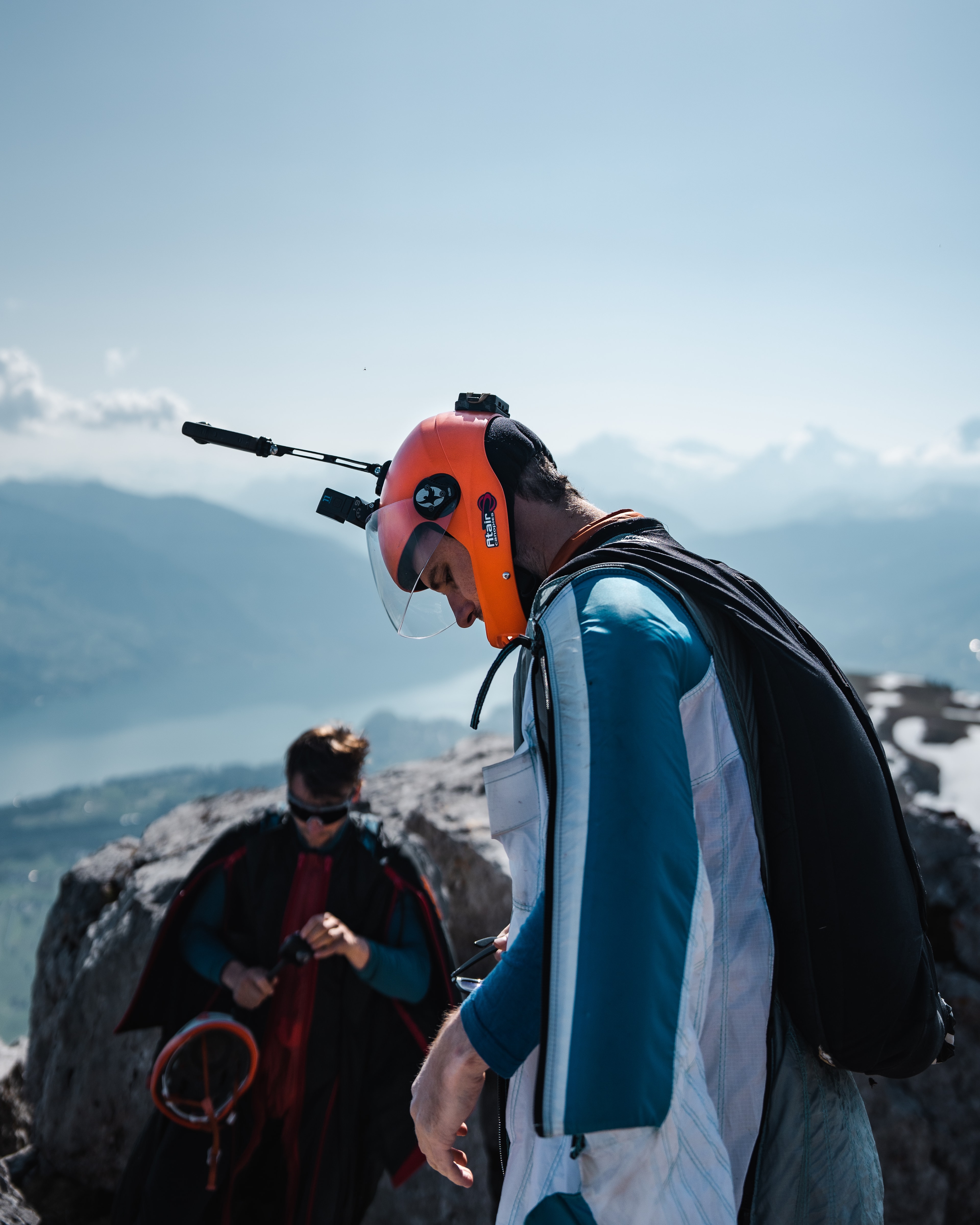
A media object that becomes ordinary equipment.
The camera is attached to protective equipment and becomes part of the athlete's technical setup.
Helmet, mount, suit and parachute container form a technical setup around the athlete.
Execution depends on focus, checks and conditions, not the camera alone.
Planning, experience and deliberate use of the technology remain decisive.
The camera does not make the decision. What matters is how it is used.
Camera presence
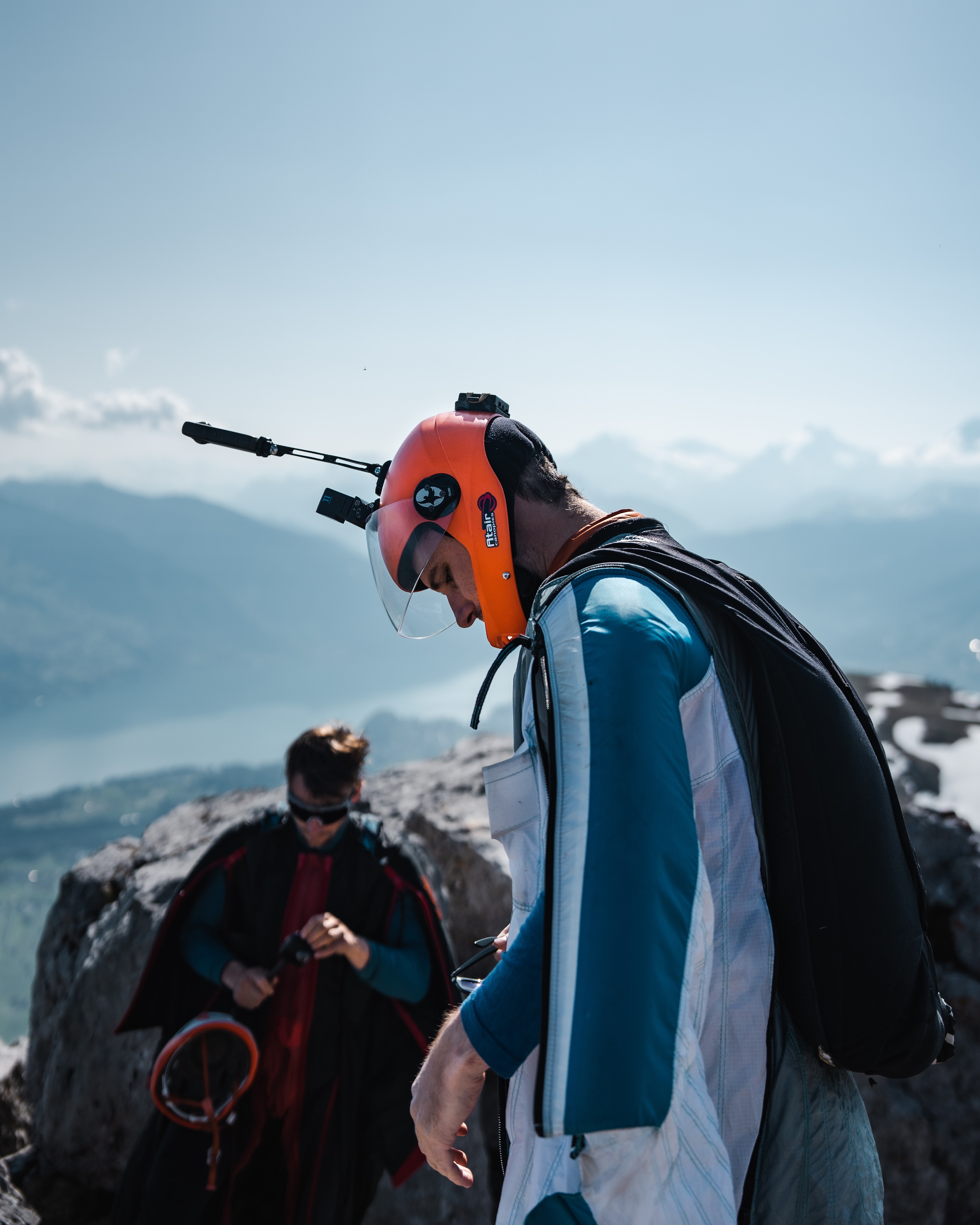
A media object that becomes ordinary equipment.
Cameras are normalised in modern BASE jumping, but the interviews do not support a simple camera-causes-risk claim.
Action camera
A media object that becomes ordinary equipment.
The camera does not make the decision. What matters is how it is used.
A polished clip may hide years of progression, accumulated experience, mentoring, mistakes, route study, weather knowledge, cancelled jumps, patience, reflection and safety culture.
What the video does not show
Social media shows the final seconds, but usually hides the years of learning, restraint and community knowledge that make those seconds possible.
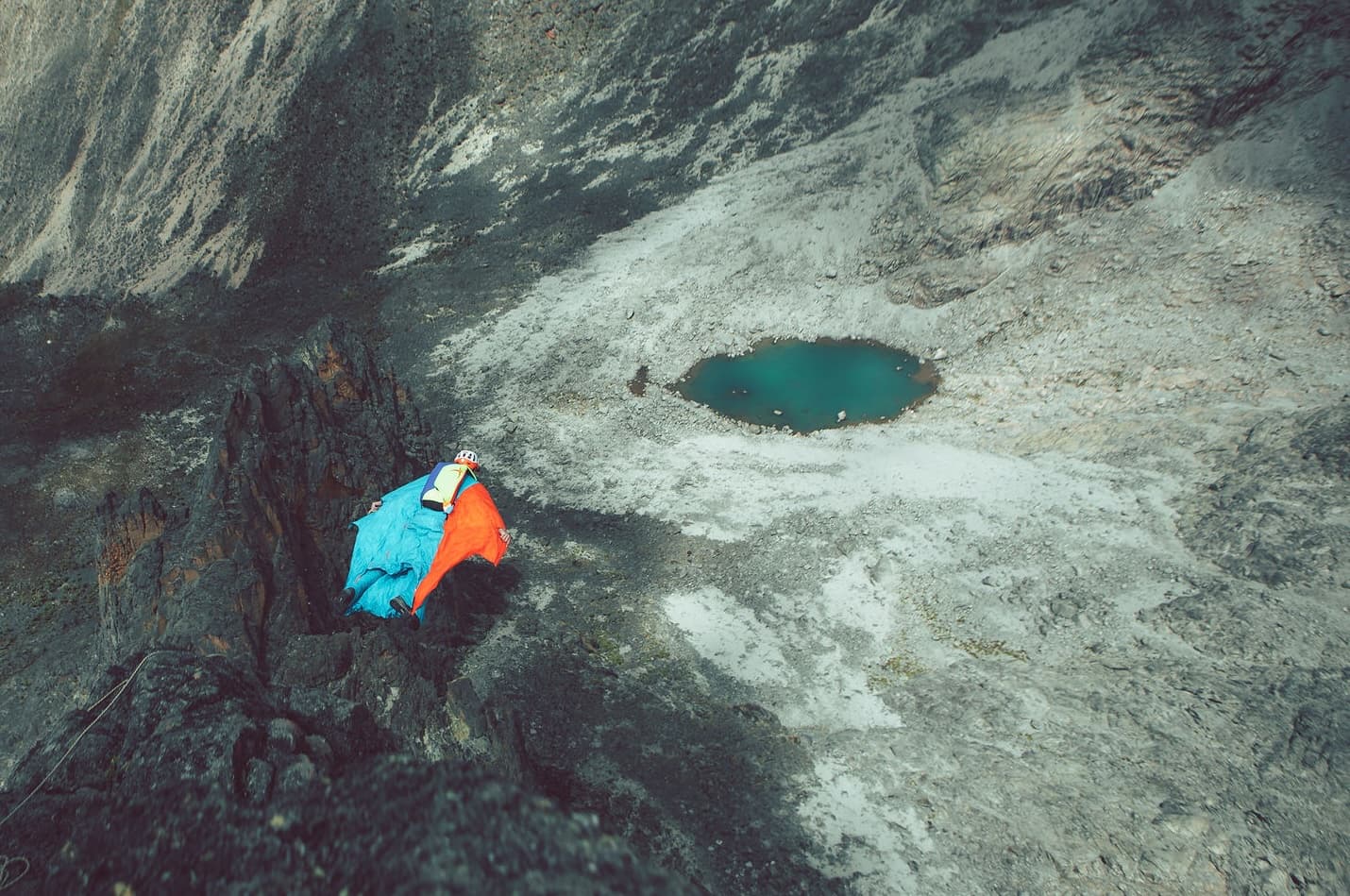
Visible: the clip
Final seconds
Invisible: the foundation
Years behind it
What the video does not show
Social media shows the final seconds, but usually hides the years of learning, restraint and community knowledge that make those seconds possible.
Visible: the clip
Final seconds
Invisible: the foundation
Years behind it
Short-term visibility can create attention, but recognition was described as being tied to experience, competence, judgement and consistent safe practice.
The difference
Several athletes distinguished digital reach from long-term recognition inside the BASE community.
Fast to appear. Fast to fade.
Trust builds slowly.
Visibility can open doors. Recognition is built over years.
Conceptual representation of the qualitative findings, not a quantitative measurement.
The difference
Several athletes distinguished digital reach from long-term recognition inside the BASE community.
Professional sponsorship includes resources, media work, communication, project development and possible indirect expectations. It is not a single path every athlete follows.
The sponsorship spectrum
Sponsorship differed substantially between athletes and ranged from minor material support to a foundation for professional work.
Reduced costs for gear.
Material support without a full livelihood.
Resources for specific expeditions or productions.
Photography and video become part of the work.
Knowledge becomes a professional service.
Sport, media and communication overlap.
Related areas of work
There’s a lot more to it than just jumping off cliffs.
The sponsorship spectrum
Sponsorship differed substantially between athletes and ranged from minor material support to a foundation for professional work.
There’s a lot more to it than just jumping off cliffs.
Related areas of work
Public visibility, project costs, deadlines, audience expectations and personal ambition can move closer to the decision unless safety boundaries remain clear.
Where pressure actually appears
Participants rarely described direct commands from sponsors. Pressure was more often indirect or self-generated.
The athlete
Safety over expectation
Experience, trust, clear agreements, personal limits and willingness to cancel restore space around the decision.
Decision making emerged as layered operational work before one jump: project selection, experience, route analysis, weather, equipment, physical and mental condition, visualisation, group responsibility and final go or no-go judgement.
What happens before the jump
Before the exit, athletes make a chain of operational decisions. Only when the layers fit together does a plan become a jump.
Project selection
Experience and skill
Route / flight line analysis
Weather and wind
Equipment
Physical condition
Mental condition
Visualisation
Group responsibility
Final Go / No-Go decision
What happens before the jump
Before the exit, athletes make a chain of operational decisions. Only when the layers fit together does a plan become a jump.
Several changing conditions can create uncertainty. Choosing not to jump is an active safety decision, not a failure. Experience and responsibility support the decision to walk down.
The most important decision
Cancelling can remain the competent decision even after a long hike, an expedition, preparation or financial investment.
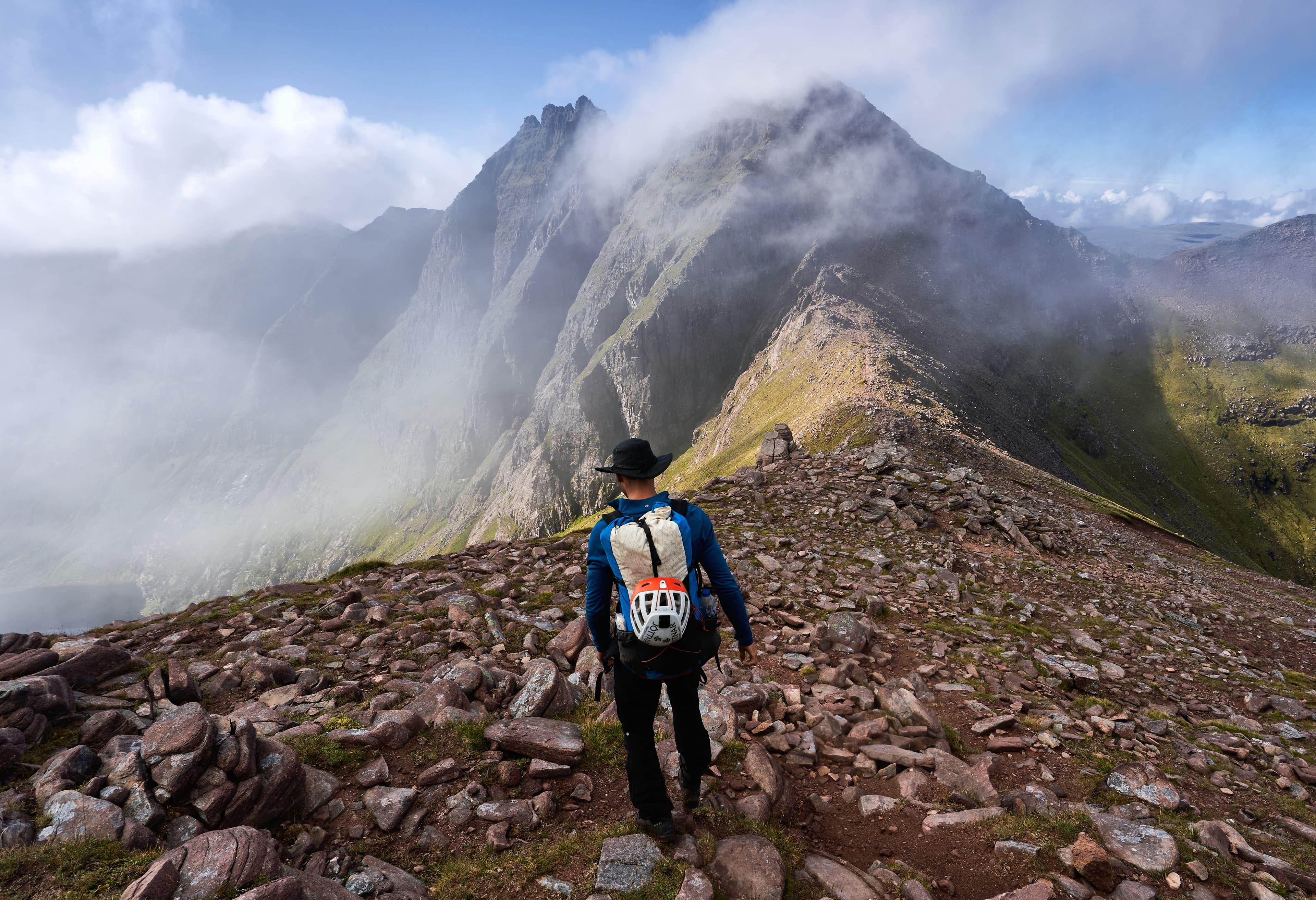
NO-GO
This decision is not spontaneous. It develops through experience.
wind
Direction and strength can change the margin.
clouds
Clouds alter visibility and timing.
visibility
Terrain must remain readable.
physical condition
Readiness is part of the decision.
mental state
Clarity matters before the exit.
intuition
A quiet doubt can be relevant.
group dynamics
The group affects the outcome.
responsibility for others
The decision includes others.
No-go
The mountain will still be there tomorrow.
The most important decision
Cancelling can remain the competent decision even after a long hike, an expedition, preparation or financial investment.
wind
Direction and strength can change the margin.
clouds
Clouds alter visibility and timing.
visibility
Terrain must remain readable.
physical condition
Readiness is part of the decision.
mental state
Clarity matters before the exit.
intuition
A quiet doubt can be relevant.
group dynamics
The group affects the outcome.
responsibility for others
The decision includes others.
This is a heuristic pattern, not a statistical model or a universal development path for every athlete.
Experience and self-assessment
The interviews suggest that growing experience changes how uncertainty is interpreted. Confidence may increase quickly, while mature judgement often develops much later.
Based on Dunning & Kruger (1999). Qualitative interpretation from the interview findings.
Everything still feels unfamiliar.
Experience creates routine. Not certainty.
Confidence can temporarily outpace judgement.
Mistakes, close calls, observation and feedback reshape judgement.
Experience becomes reflection. Not fearlessness.
Experience and self-assessment
The interviews suggest that growing experience changes how uncertainty is interpreted. Confidence may increase quickly, while mature judgement often develops much later.
Uncertainty can create restraint.
Competence grows through practice.
Perceived ability can move closer to uncertainty.
Errors, close calls, accidents, loss and observation matter.
Reflection changes how risk is interpreted.
Based on Dunning & Kruger (1999). Qualitative interpretation from the interview findings.
Safety is social
The community provides knowledge, mentoring and orientation, but it cannot guarantee safe decisions.
The model shows why influence is indirect: external conditions matter, but experience, risk competence and safety culture mediate how they become decisions.
Synthesis
Visibility does not directly create risk. It changes the conditions in which decisions are made.
Social media and sponsorship change the context around a jump, not the decision itself.
Visibility creates expectations, comparison, recognition and social orientation.
But
Experience, risk competence and safety culture determine how external influences are interpreted.
Every jump remains an individual decision. Platforms and sponsors do not decide; the athlete does.
The same environment can support informed safety-oriented decisions or create problematic exposure when protective factors fail.
The model explains why influence is indirect. The examples show how the same forces can become protective or problematic in practice.
What this means
social media -> inspiration -> learning -> greater knowledge -> more informed decision
spectacular content -> imitation -> insufficient progression -> potentially problematic decision
sponsorship -> resources -> training -> projects -> better preparation
sponsorship -> expectations -> self-generated pressure -> reduced decision freedom -> potentially altered decisions
Research context
This qualitative exploratory study does not attempt to explain BASE jumping as a whole. It offers in-depth insight into how experienced athletes perceive visibility, sponsorship, risk and safety culture.
The study is based on five experienced male BASE athletes, guided interviews, participant observations, photo elicitation and thematic analysis.
Qualitative exploratory research design with reflexive thematic analysis.
Guided interviews, participant observation and photo elicitation.
Five experienced male BASE athletes.
The study provides qualitative depth rather than statistical representativeness.
The perspectives are limited to experienced male athletes. Beginners and women are not represented in the sample.
The findings do not make causal claims and cannot be transferred to the whole BASE jumping community as universal rules.
Survivorship bias cannot be excluded. The findings mainly reflect experienced, safety-oriented athletes and should be read in that context.
Visibility does not change decisions directly. It changes the conditions in which decisions emerge.